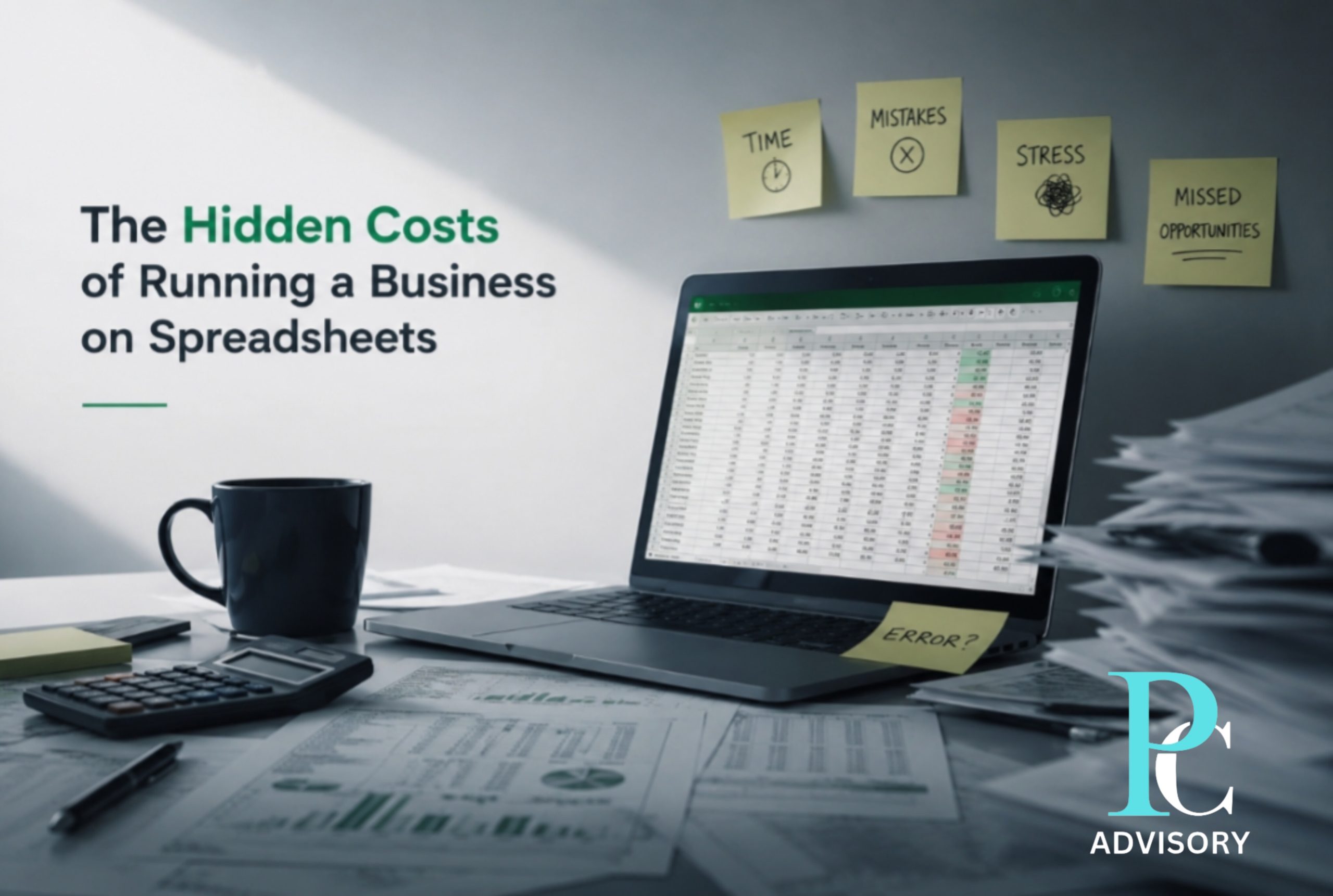
Excel is a useful tool, especially when a business is just starting. However, as a business grows, Excel becomes risky and inefficient. Many growing businesses struggle because they rely on spreadsheets instead of a proper ERP system.
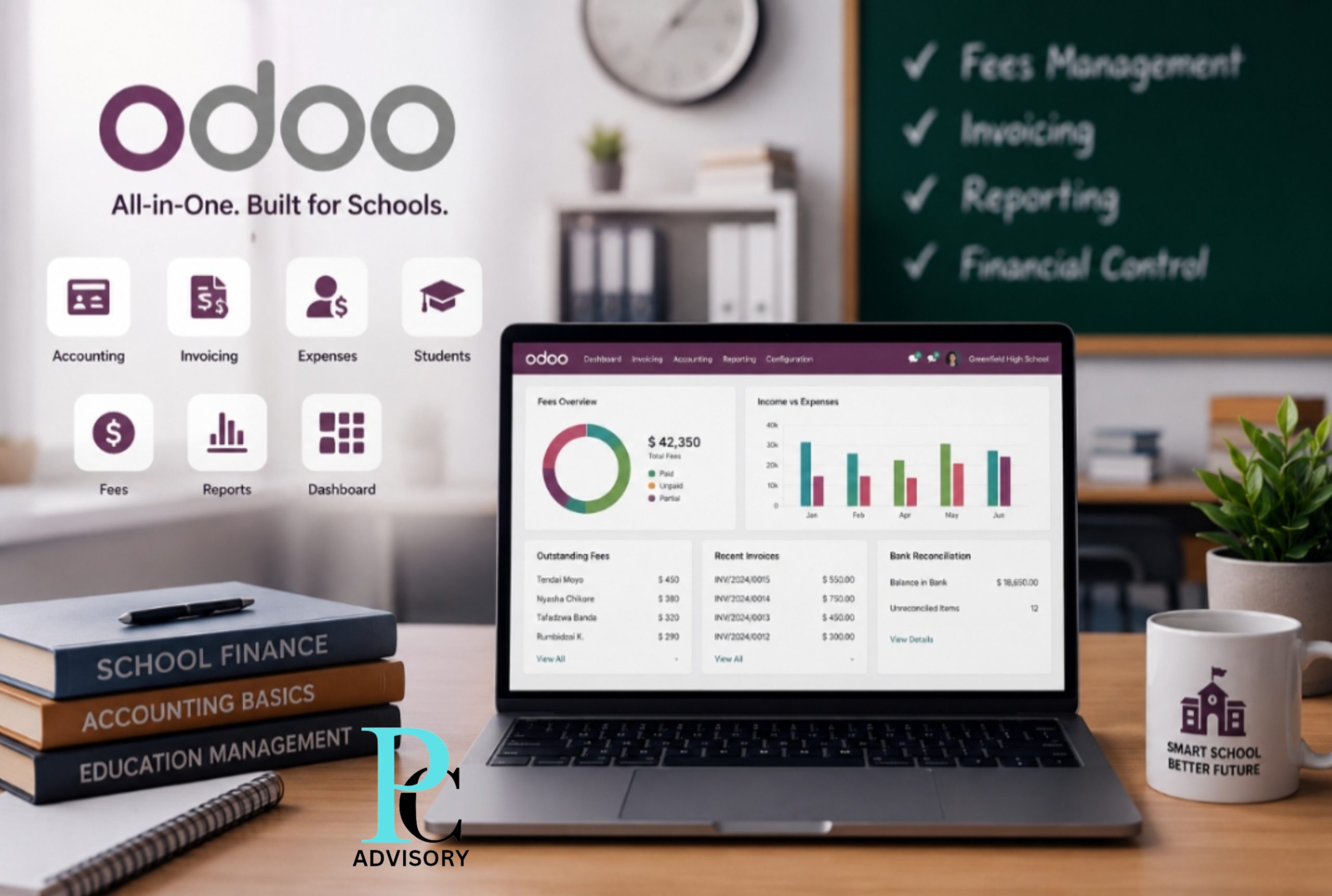
An ERP system helps businesses manage operations in one connected platform.
What Is an ERP System?
ERP stands for Enterprise Resource Planning.
It is a system that brings together key business functions such as:
Accounting and finance
Sales and invoicing
Inventory management
Payroll and HR
Reporting and compliance
Everything works in one system, in real time.
Why Excel Fails as Businesses Grow
1. High Risk of Errors
Excel relies on manual entry. A small mistake can affect:
Financial reports
Stock balances
Payroll calculations
As data increases, errors become harder to detect.
2. No Real-Time Information
Excel files are often outdated the moment they are saved.
Growing businesses need real-time data to:
Track sales
Manage cash flow
Make fast decisions
Without this, management is always behind.
3. Poor Control and Security
Excel files can be:
Edited by anyone
Accidentally deleted
Duplicated or lost
ERP systems have user controls, approvals, and audit trails that protect business data.
4. Difficult to Scale
As transactions increase, Excel becomes slow and confusing.
ERP systems are designed to grow with the business, handling more data, users, and processes smoothly.
5. Limited Reporting
Excel reports take time to prepare and often depend on one person.
ERP systems provide:
Automated reports
Accurate dashboards
Clear insights for decision-making
How an ERP System Improves Business Operations
A proper ERP system:
Connects all departments
Reduces duplication of work
Improves accuracy
Saves time and costs
Supports compliance and audits
This leads to better control and efficiency.
Signs Your Business Has Outgrown Excel
You use multiple spreadsheets for the same data
Reports take too long to prepare
Errors are frequent
Stock and cash figures do not match
Decision-making feels reactive
These are clear warning signs.
Why ERP Is an Investment, Not a Cost
Although ERP systems require investment, they:
Reduce losses from errors
Improve productivity
Support business growth
Increase business value
The cost of staying on Excel is often higher than moving to ERP.
Final Thoughts
Excel is good for small operations, but it is not built for growth.
A proper ERP system gives your business control, visibility, and confidence to scale.
Growing businesses that move early to ERP are better prepared for long-term success.