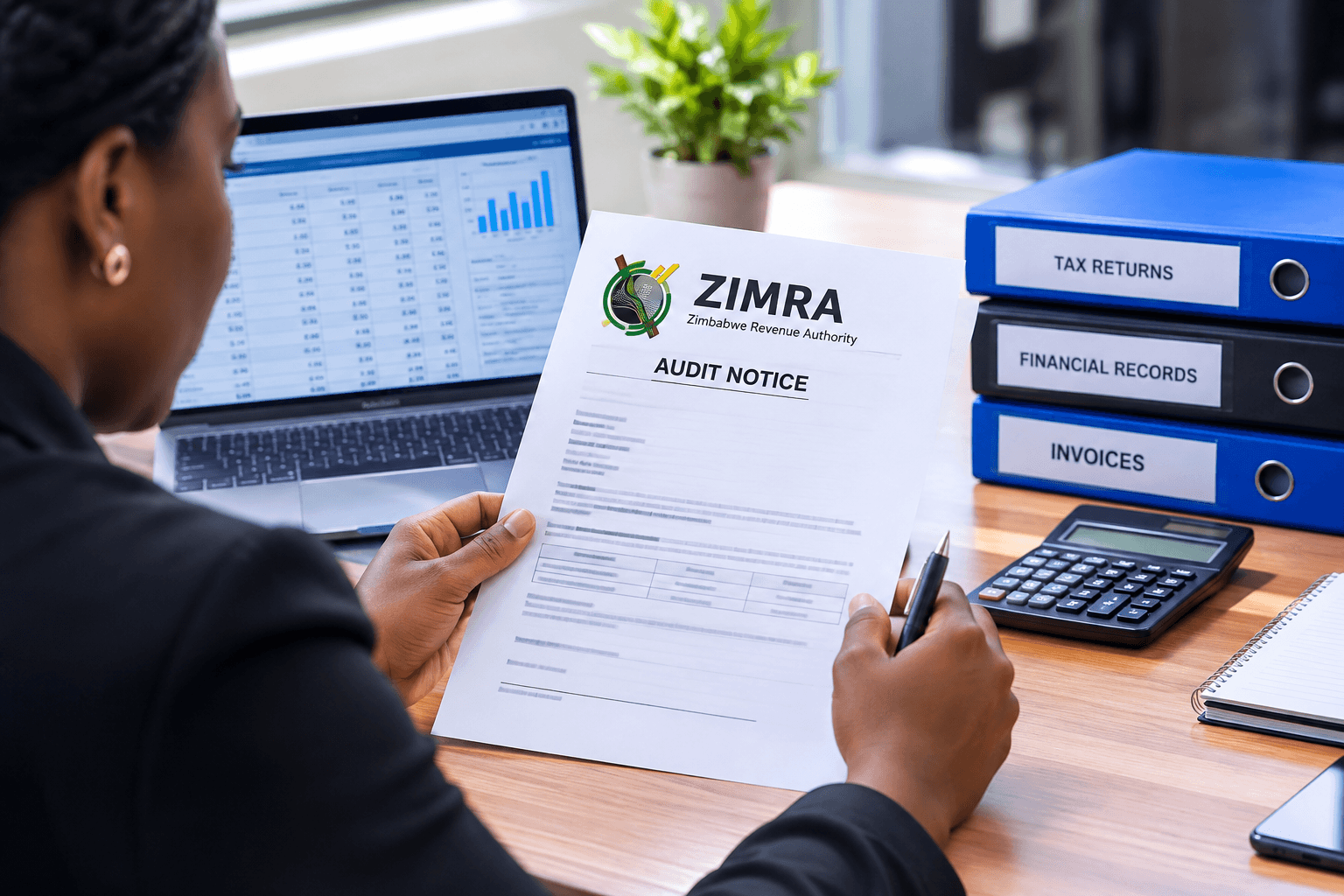
ZIMRA Audit Notice Received? The First Things a Business Should Do
- Read the Audit Notice Carefully
Start by checking the details in the notice. Look at the tax type, periods under review, information requested, deadlines and the contact details of the ZIMRA officer. Understanding the scope of the audit helps the business focus on the relevant records instead of preparing unnecessary information.
- Do Not Ignore the Deadline
A ZIMRA audit should be treated as a priority. If the notice requires documents or a response by a specific date, make sure the business acts within the stated timeframe. If more time or clarification is genuinely needed, communicate with ZIMRA promptly rather than simply missing the deadline.
- Gather the Relevant Records
Collect the records that relate to the period and taxes under review. Depending on the audit, these may include accounting records, invoices, bank statements, payroll information, VAT records, tax returns, contracts and supporting documents. Organise the records by period and type so they can be reviewed easily.
- Review Your Tax Records Before Responding
Before submitting information, compare the requested records with the tax returns already filed. Check for obvious differences, missing documents, unusual transactions and calculations that may need explanation. This internal review can help the business understand potential questions before the audit progresses.
- Keep the Records Complete and Unchanged
Do not create, alter or destroy records simply because an audit has started. Keep the original accounting and supporting documents available. If a record is missing, identify it honestly and consider how the gap can be explained or supported with other legitimate evidence.
- Get Professional Advice Where Necessary
Some audits involve complex VAT, corporate tax, payroll or cross-border transactions. If the issues are complicated, a qualified tax practitioner or accountant can help the business understand the records, prepare a response and communicate clearly with ZIMRA.
- Keep a Clear Audit File
Create one working file for the audit. Keep the audit notice, correspondence, documents submitted, explanations provided and important dates together. A clear audit trail makes it easier to track what has been requested, what has been supplied and what remains outstanding.
What Businesses Should Avoid
- Ignoring the audit notice.
- Submitting incomplete or poorly organised records without checking them.
- Giving explanations that are not supported by the business records.
- Destroying or changing records after receiving the notice.
Assuming that an audit automatically means the business has done something wrong.
Final Thoughts
A ZIMRA audit notice does not mean a business should panic. The most useful first steps are to understand the notice, meet the required deadlines, gather the relevant records and review the information carefully. Good preparation can make the process more organised and help the business respond accurately. Because tax procedures and requirements may change, businesses should confirm the current requirements with ZIMRA or obtain advice from a qualified tax professional.